

Advertisement
Greener Plates, Stronger Immunity
Small shifts can support your immune system and the planet you love

Fact-Checked
This article has been written and fact-checked by experts in the field.
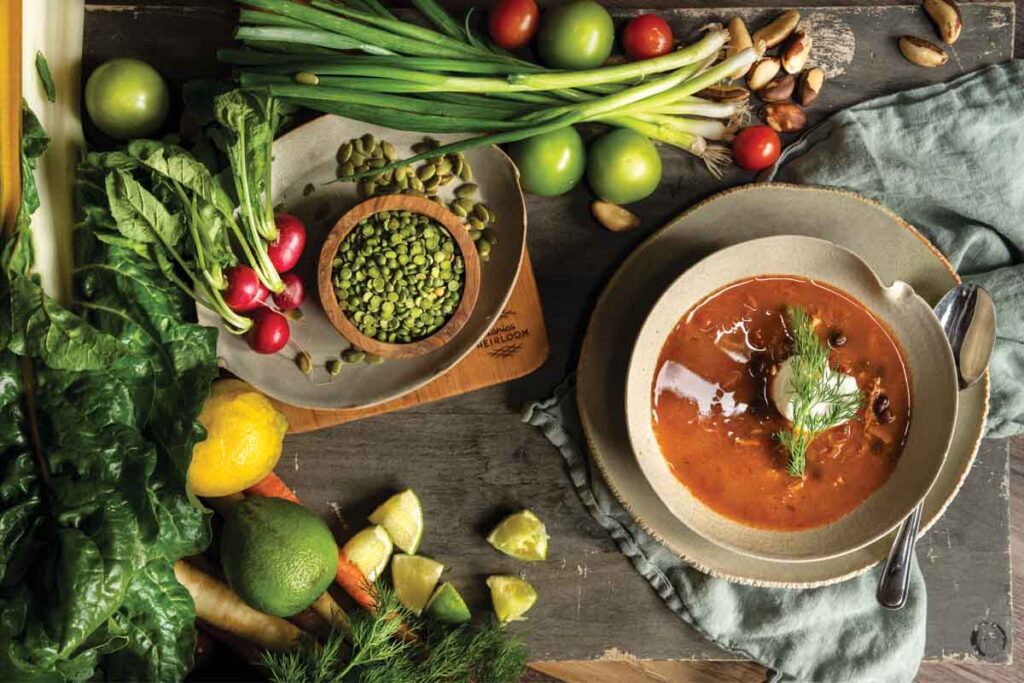
Spring has a way of making us want to hit reset. After months of heavier comfort food, many of us are thinking about how to feel stronger and more resilient while doing right by the planet. You don’t need to overhaul your diet to lighten your environmental food-print. The key lies in focusing on nutrient-dense, minimally processed foods and learning to spot the labels that can help you make better choices.
Advertisement
Quality matters more than category
A recent Canadian study showed that diets heavy in red meat have the highest carbon footprint, followed by other carnivorous diets, then vegetarian, and finally vegan diets.
It’s tempting to think that swapping beef for beans automatically makes a diet healthier and greener. But as Mary Purdy, managing director of the Nutrient Density Initiative and adjunct faculty at The Culinary Institute of America, points out, it depends on how these meat-free foods are grown and processed.
“These dietary patterns in general are going to have a lighter food-print than a more animal-based protein diet and may provide a greater spectrum of nutrients that support well-being and immune function,” says Purdy. But a plant-forward plate built on ultra-processed packaged foods or seafood farmed unsustainably misses the mark on both counts.
Try implementing these into your week for more sustainable eating:
The 1-1-1 greener plate habit
Advertisement
So, what does support immune resilience?
Think whole, minimally processed foods:
- colourful produce rich in vitamin C
- fatty fish and fortified foods for vitamin D
- beans and shellfish for zinc
- leafy greens for magnesium
- fermented foods, such as yogurt and sauerkraut, for beneficial probiotics
When sourced organically or regeneratively, Purdy adds, these foods tend to be more nutrient-dense and gentler on the soil that grows them.
Plant-forward, pescatarian, flexitarian: what’s the difference?[SUBHEAD]
These terms get tossed around interchangeably, but each describes a slightly different approach. Plant-forward eating centres meals on vegetables, legumes, and whole grains while leaving room for animal foods in smaller roles. Pescatarian diets skip meat but include fish and seafood. Flexitarian eating is exactly what it sounds like―mostly plant-based, with occasional meat or poultry.
On average, all three patterns shift more meals toward plants and away from resource-intensive red meat, which can increase the variety of immune-supportive nutrients while reducing environmental impact. But Purdy stresses that sourcing matters, because while omega-3 levels are relatively similar in wild and farmed fish such as salmon, a pollutant linked to type 2 diabetes and obesity is 16 times higher in farmed varieties.
Even small shifts can make a difference. This might look like choosing one legume or lentil-based dinner per week in place of beef; enjoying wild or certified sustainable fatty fish a few times per week; or centring meals on beans, whole grains, and vegetables with animal foods playing a supporting role.
Another food shift that has one of the biggest impacts, according to Purdy, is replacing some animal-based proteins with plant-based ones. “Adding in a variety of beans, lentils, tofu, tempeh, nuts, and seeds into some already beloved dishes [soups, stews, salads, and sandwiches] can be an easy on ramp,” she says.
Canada’s new front-of-package nutrition symbols help shoppers quickly spot products high in sodium, sugars, or saturated fat. But consumers want more, NSF research found: Look for QR codes that link to deeper information and check whether claims are independently verified or self-declared.
The future of food labelling
Advertisement
Star foods for body and planet
When it comes to foods that benefit both your immune system and the environment, colour is your compass.
“Bring in those colourful vegetables and fruits that are rich in beneficial plant compounds, which help to bolster our immunity,” says Purdy. She adds that organic and regeneratively grown produce tends to contain higher levels of these protective compounds and supports healthier soil in the process. Buying local and seasonal also reduces transit time, which means fewer fossil fuels burned and less nutrient loss between farm and fork.
Purdy calls beans and lentils “rock stars of sustainability” because they use fewer resources to grow, take less energy to produce, and actually help fertilize soil by fixing nitrogen naturally. They’re also loaded with fibre, which feeds the beneficial microbes in your gut, where 70 to 80 percent of immune cells reside.
If beans have given you trouble in the past, Purdy suggests starting small. “Try about half a cup and combine with herbs that act as natural carminatives, which help to dispel gas, such as cumin, ginger, or cilantro,” she says.
Seeds and fermented foods (yogurt, kefir, and sauerkraut, etc.) are other nutrient-dense options Purdy recommends adding to your rotation.
Advertisement
Decoding “eco,” “natural,” and “better-for-you”
Walk down any grocery aisle and you’ll see packages covered in green leaves, earthy colours, and words like “natural,” “eco-friendly,” and “sustainable.” But what do those terms actually mean?
“The biggest confusion comes from all the buzzwords that sound meaningful but don’t actually have a standard definition,” says Ashley Cornell, director of regulatory affairs and policy at the Canadian Health Food Association. She notes that shoppers often trust “natural” more than “organic” even though “natural” has no formal definition, while “organic” is nationally regulated and covers farming practices that support soil health and biodiversity.
Purdy agrees. Terms like “natural,” “sustainable,” or “eco-friendly” “have no agreed-upon definitions or standardization in the food industry, so greenwashing can be common,” she says.
So, what should you actually look for?
Purdy notes that many people fall short on basic nutrients: Supplementation can help fill gaps. Look for brands focused on sustainable sourcing and minimal packaging.
Supplements for immune support
Advertisement
How to spot brands that walk the talk
If you don’t have time to read sustainability reports, Cornell suggests a few cues worth looking for on the package.
“Labels like ‘organic’ or ‘fairtrade’ and third-party certifications like those from Marine Stewardship Council [MSC] aren’t perfect, but they’re still far more reliable than vague green language,” she says. Shorter ingredient lists often signal less processing, which is better for you and typically lighter on the environment. Country of origin helps, too, especially for produce and perishables where shorter transport can make a real difference.
Most telling? Specificity. “Terms like ‘sustainably sourced’ don’t mean much on their own,” Cornell explains. “But if a brand explains how, for example, food is ‘grown using regenerative practices that reduce soil erosion,’ that’s usually an indicator of real effort.”
Advertisement
Small shifts, lasting resilience
Eating greener doesn’t have to break the bank. Purdy points out that whole foods are often cheaper than their processed counterparts―a two-pound bag of apples beats apple chips, and canned beans remain one of the most affordable proteins around. Bulk sections save money and packaging, and farmers’ markets often have deals later in the day.
The bigger picture is that adding nourishing foods and variety tends to be more powerful―and less stressful―than rigid restriction. The same habits that support your immune defences can help protect the ecosystems we all share—one colourful, mindful grocery haul at a time.
For many people, the journey to organic starts in the kitchen. But the impact of organic food extends far beyond what’s on the plate, influencing everything from soil quality and clean water to community well-being and planetary health. One of the most compelling reasons to eat organic foods is reduced exposure to pesticides. Research shows that residues from chemicals found in conventionally grown foods can accumulate in the body. A 2019 study published in Environmental Research found that families who switched to an organic diet saw pesticide levels drop dramatically. Organic standards in Canada prohibit the use of synthetic pesticides and genetically modified organisms, helping keep harmful chemicals out of food systems and out of our bodies. Organic farming also puts soil health first. Through practices such as crop rotation, composting, and cover cropping, organic farmers build living soils rich in microorganisms. Healthy, vibrant soils lock in water, protect against erosion, and nurture lasting fertility, all while yielding crops that are rich in nutrients. Biodiversity thrives on organic farms. Organic practices protect pollinators such as bees and butterflies by keeping their habitats chemical-free. Biodiversity also naturally limits the spread of pesticide-resistant weeds and pests, helping maintain balanced farm ecosystems. Nutritionally speaking, organic foods may offer added benefits. Large-scale reviews have found higher levels of antioxidants, polyphenols, and flavonoids—substances associated with improved immune health—in organic crops and animal products compared to those found in conventional harvests. Many people also report that organic foods simply taste better, a difference that’s been linked to healthier soils, slower growth, and reduced stress on plants and animals. Organic agriculture is also better for Canada’s waterways. Reduced runoff means less contamination of rivers, lakes, and coastal ecosystems. Healthy organic soils also store more carbon, making organic farming an important tool for mitigating climate change. Regenerative farming builds on organic principles by actively restoring soil, increasing biodiversity, and enhancing carbon sequestration, creating farms that don’t just sustain the land but also help heal it. From farm to table, Canadian organic foods are monitored through rigorous certification and inspections. Choosing local organics is even more of a win. Locally grown produce spends less time in transit; fresher foods retain nutrients and flavour; and buying local boosts economic activity close to home. Going organic is more than just reading a label. It’s also a commitment to food that nourishes people and the planet alike.
The benefits of going organic
This article was originally published in the April 2026 issue of alive magazine.