

Advertisement
Get Organized
Declutter and refresh—inside and out

Fact-Checked
This article has been written and fact-checked by experts in the field.
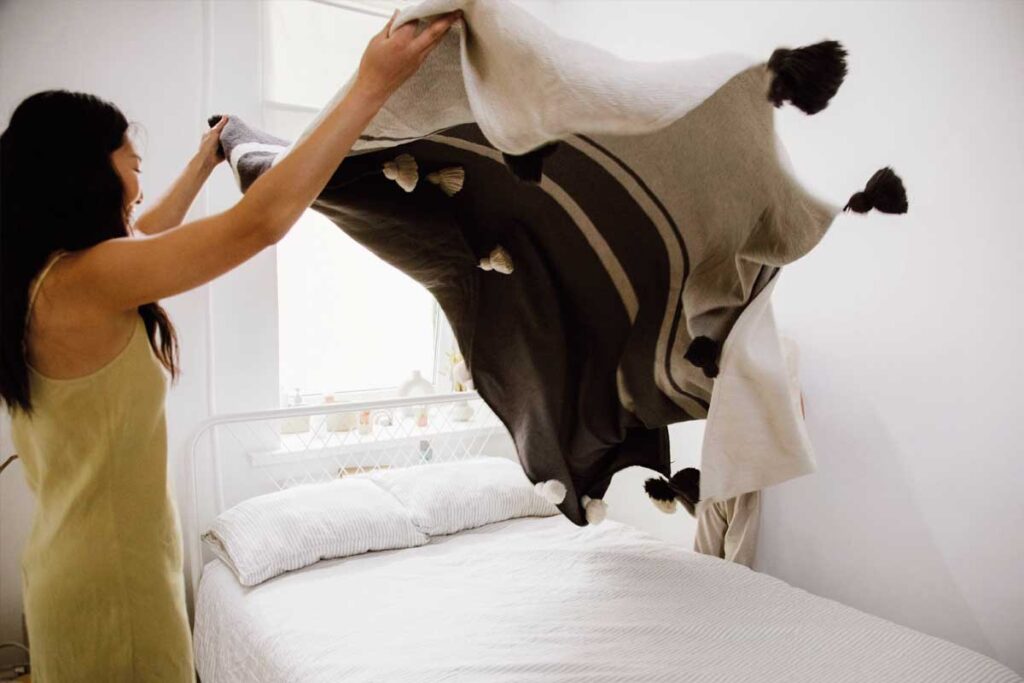
We see spring as a time for renewal. This season, let’s kick things up a notch by organizing for our bodies and our brains. Spring cleaning isn’t just about sparkling countertops—it’s also about creating a healthier home and a calmer mind.
Hoarding versus clutter
Having a hoarding disorder isn’t the same thing as having a messy or cluttered home—hoarding is a serious condition that requires professional help. It is often marked by excessive acquisition of things and difficulty getting rid of them. Rooms in the home may not be usable and passageways may become blocked.
If you feel that you struggle with hoarding disorder, reach out to a mental health professional or your primary care practitioner.
Advertisement
The mind-body connection
Jane Stoller is a professional organizer and the author of Decluttering for Dummies (John Wiley & Sons, Inc., 2019). As a Swiss Canadian, she grew up learning the value of organization (“it’s in the Swiss culture!” she says with a laugh). Now as a new mom to twin toddlers, organizing is more important to her than ever.
According to Stoller, having a clean and organized home isn’t just about aesthetics; it can also improve our mental and emotional health—and science backs her up. Household clutter has been moderately associated with more stress and lower life satisfaction. Decluttering can reduce stress, improve focus, and contribute to overall well-being by establishing a sense of control over one’s environment.
This probably doesn’t come as a surprise, especially in our current chaotic world. “We’re all so stressed these days,” asserts Stoller. “The world is moving so fast, and it’s so consumerist. There is so much new stuff. Plus, with social media, we all have a sense of digital clutter, too. We can never seem to take a break—that mental calmness never happens.”
Natural antihistamines may help provide relief from allergy symptoms:
- Quercetin is a flavonoid with potential anti-allergic, anti-inflammatory, and antioxidative properties.
- Zinc deficiency may be associated with worsened asthma symptoms and lower lung function.
- Curcumin may help relieve allergy-related nasal symptoms.
- Vitamin C deficiency may be linked to allergies; a small 2018 study found that intravenous vitamin C helped improve symptoms.
- Spirulina may improve allergy-related nasal symptoms and reduce inflammatory markers.
Advertisement
Start small and keep going
To avoid becoming overwhelmed, Stoller recommends starting small by doing 10 minutes of organizing and decluttering daily. First, decide on your priorities. What in your home is stressing you out the most? What are your goals? Consider beginning with just one corner or drawer.
Eventually, you can have an on-the-go donation bin, and everything in your living space should have its own “home” so it won’t end up as clutter.
If it feels like too much, consider enlisting the help of a friend or even hiring a professional organizer. Many offer virtual sessions. “Don’t shy away from hiring a professional. It’s just like getting a personal trainer at the gym,” Stoller says.
5 tips for organizing as a family
Staying organized with kids is possible, Stoller promises. These simple tips can help:
- Kids can get overwhelmed by stuff; consider rotating toys so they don’t have too many at any one time.
- Family members may love buying things for your kids, but you can set boundaries with wish lists in advance of holidays.
- Consider doing more minimal goody bags (maybe a coupon for an ice cream cone or some flower seeds rather than plastic toys).
- Let your kids decorate a box for ongoing donations and decluttering. This creates fun and helps them take ownership of the process.
- Allow your children to have special collections, like Lego or seashells. “Give a designated space and size for the collection so it does not take over the household but allows for it to be used and cherished,” says Stoller.
Advertisement
Do what works for you
“Not everyone sees an object in the same way,” explains Stoller. “One person’s trash is another person’s treasure, and clutter doesn’t affect everyone equally. It’s not always bad if it doesn’t affect your focus.”
That’s why decluttering and organizing are highly personal. “You need to do what makes sense for you,” Stoller adds. In couples and families, this means that organization systems need to be communicated and agreed upon. Beloved collections are subjective, for example. “Decide what levels of clutter are tolerable,” she advises. “Maybe in your family, children’s building creations are fine all over the living room floor, but kitchen surfaces need to be clear.” Stoller is quick to point out that minimalism isn’t the goal—mental wellness is.
Clean smarter, breathe easier
It’s important to pay attention to our indoor air quality. This is especially vital for those with allergies, asthma, or a weakened immune system.
Common cleaning products can contain different lung irritants:
- quaternary ammonium compounds
- hydrogen peroxide
- bleach
- alcohols
We can do a lot to reduce allergens and improve air quality at home:
- Reduce dust by cleaning often (decluttering can help as knickknacks can collect dust).
- Avoid fragranced products.
- Improve ventilation.
- Use air purifiers.
- Turn on bathroom fans and kitchen range hoods.
- Ensure your home is free from water damage and mould.
Gentler cleaning for a healthier planet
Small habit swaps can make a big difference:
- Consider switching to eco-friendly cleaning products.
- Refill products instead of rebuying to reduce waste.
- Choose reusable products such as rags rather than paper towels.
This article was originally published in the April 2026 issue of alive magazine.